

The Post-Pandemic Economy: What Will Our “Roaring 20s” Be Like?

Pandemics are catastrophic, worldwide events that stand out in the history books due to the fear and anxiety they provoke and the devastating loss of life left in their wake. Highly communicable influenzas like COVID-19 typically feature a new virus strain that is easily spread from person-to-person and infects a large portion of the global population.
The current health crisis has brought about frequent comparisons with another novel coronavirus outbreak that occurred over a hundred years ago, the Spanish Flu of 1918 which killed some 50 million people worldwide including an estimated 675,000 Americans. Like COVID-19, the Spanish Flu struck suddenly, spread quickly, triggered quarantines and overwhelmed health care systems. It battered retail businesses, shut down transportation, and crippled domestic industry.
But in a visionary 2007 report entitled the Economic Effects of the 1918 Influenza Pandemic: Implications for a Modern-day Pandemic, the St. Louis Fed concluded that the financial fallout of the Spanish Flu was short-term and while many lives were lost and cultural norms were disrupted — society as a whole recovered quickly. The Dow actually held steady throughout 1918 and when the pandemic subsided in early 1919, the market began a 50% rise that lasted the balance of the year.
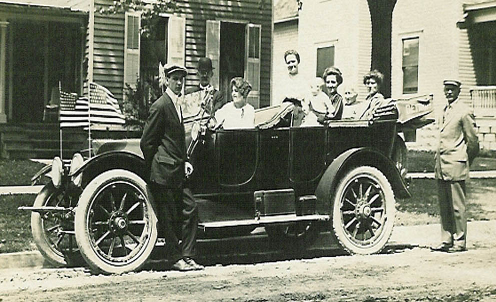
Real Estate also rose and homeownership skyrocketed throughout the 1920s as boom cities like New York, Chicago, and Los Angeles saw unprecedented demand fueled by a historic spike in population. The rise of the automobile gave Americans new freedom and flexibility to not only live on the urban fringe, but to fuel an ever-growing suburban trend.
In the years after the Spanish Flu, America’s total wealth more than doubled as millions invested in the financial markets, bought new Ford cars, built Neo-Gothic homes, and indulged in a host of newfangled gadgets. It was the decade that “roared” with social and political change — as the birth of mass culture and the mass market put consumers firmly in charge.
Consumers are once again in charge and in the wake of the pandemic of 2020 many will return to the markets, buy cars at 0% interest, purchase an open concept home, and indulge in smart technology. Others, however, will quietly diversify their money into hard assets like real estate, an industry once again on the cusp of dramatic social change. In the wake of COVID-19 housing, living space and personal proximity will likely never be the same. How we live and, in many cases, where we live — could push Americans back to the fringes and beyond.
Time will tell what type of post-pandemic decade this will be and whether we too will dramatically change our social posture, alter our political destiny, or proceed through these “20’s” with a resounding “roar” or a muted “whimper.”
But there’s one overriding certainty. Despite pandemics, recessions, downturns and depressions - real property, according to the Dallas Fed’s 2014 report “No Price Like Home,” is the hard asset that has risen “significantly over the past 140 years relative to consumer prices.” It is an asset class that offers profit, liquidity and cash flow - and one that cannot evaporate due to panic, speculation, or a sudden change in sentiment.
To find out more about timely real estate investment opportunities with low risk and high returns, click here.